Repressions against all religious minorities, reminiscent of the Soviet times, returned to Ukrainian territories occupied by Russia. Persecution of the occupation authorities especially affects Ukrainian evangelical churches, which the Russian propaganda labels “American agents,” “sectarians,” or “extremists.”
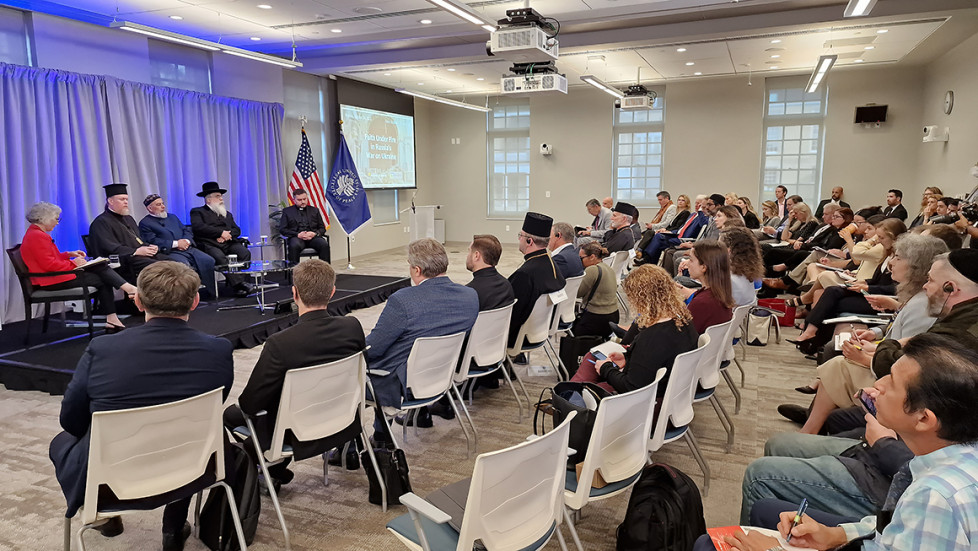
The Ukrainian Council of Churches and Religious Organizations (UCCRO) delegation testified on this topic during meetings in the US capital. On the morning of October 30, 2023, panel discussions at the United States Institute of Peace in Washington, D.C., began for Ukrainian religious leaders and continued with a roundtable discussion involving American experts and opinion leaders.
The head of the Seventh-day Adventist Church in Ukraine, Chairman of the UCCRO, Stanislav Nosov, reported that 27 Adventist prayer houses were damaged as a result of the Russian invasion, of which 6 were completely destroyed. He also spoke about the blatant desecration of religious shrines. As an example, in the occupied Gorlivka in Donetsk region, the Russian authorities turned an Adventist prayer house into a funeral home, where they put coffins for sale in the middle of the worship hall.
At the same time, Anatoliy Kozachok, Senior Bishop of the Ukrainian Pentecostal Church, reported that the Russian military completely destroyed 7 prayer houses of Pentecostal Christians. Another 63 prayer houses were damaged as a result of Russian shelling or targeted looting.
“It is obvious to us that Russia seeks to destroy Ukrainians as a nation and as a people, as well as to destroy any idea of an independent Ukrainian state. After the collapse of the Soviet Union, democracy began to flourish in Ukraine, true freedom of religion appeared, and religious pluralism was established. However, now Russia seeks to destroy all this and is establishing the ideology of “Russkiy Mir” (Russian World) in the occupied territories of Ukraine, which envisages the complete destruction of Ukrainian identity and brutal repression against all those disloyal to the occupiers and all religious minorities," said the Chief Rabbi of Kyiv and Ukraine, Yaakov Dov Bleich.
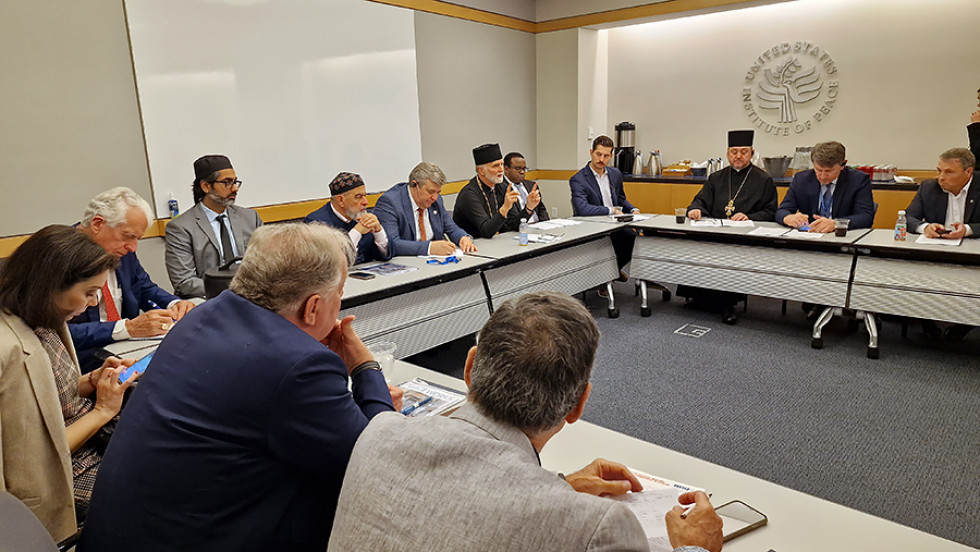
During a panel discussion at the U.S. Institute of Peace, the Metropolitan of Ukrainian Greek Catholic Archeparchy of Philadelphia, Borys Gudziak, stressed that every time the Russian state occupies the territory of Ukraine, the Ukrainian Greek Catholic Church loses its legal status and is persecuted. “It was so under Queen Catherine in the nineteenth century and in the twentieth century when the Church was liquidated, and it is so now. Ukrainian Churches and religious organizations know that Russian occupation brings limitation or even destruction to our religious freedom.” He noted that there were almost no active Catholic priests left in the occupied territories, whether of the Eastern or Western rites.
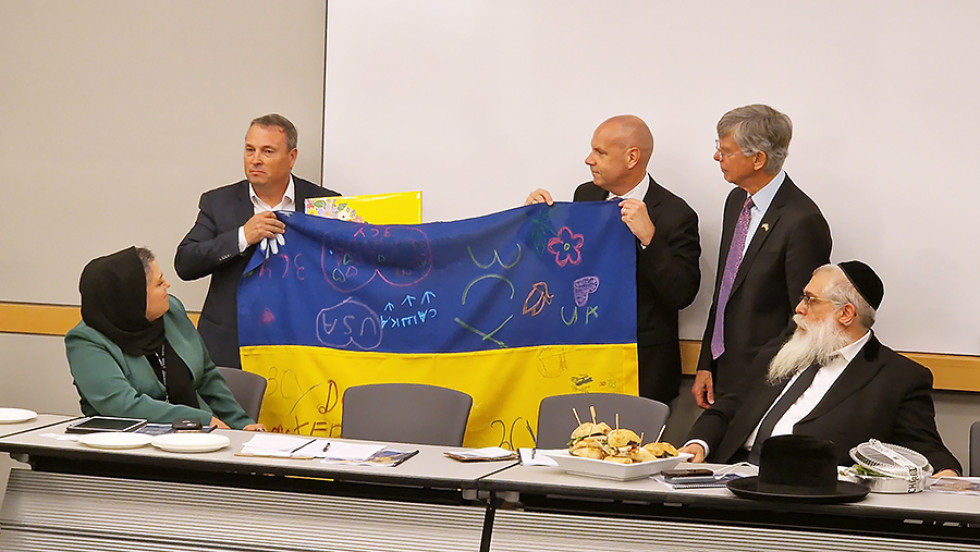
Ukrainian religious leaders took part in a separate meeting on this issue at the U.S. Department of State, where they met with Rashad Hussein, U.S. Ambassador-at-Large for International Religious Freedom. The UCCRO delegates testified that a high level of religious freedom remains in Ukraine, and no church has been closed. In contrast, the Russian authorities use religion as a propaganda tool and force religious communities to cooperate with the FSB (formerly the KGB), including in the occupied territories.
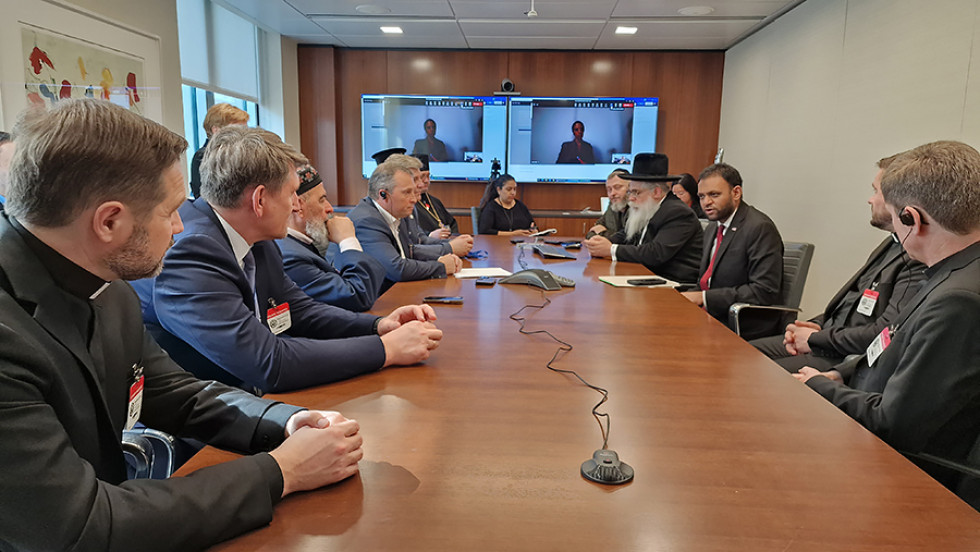
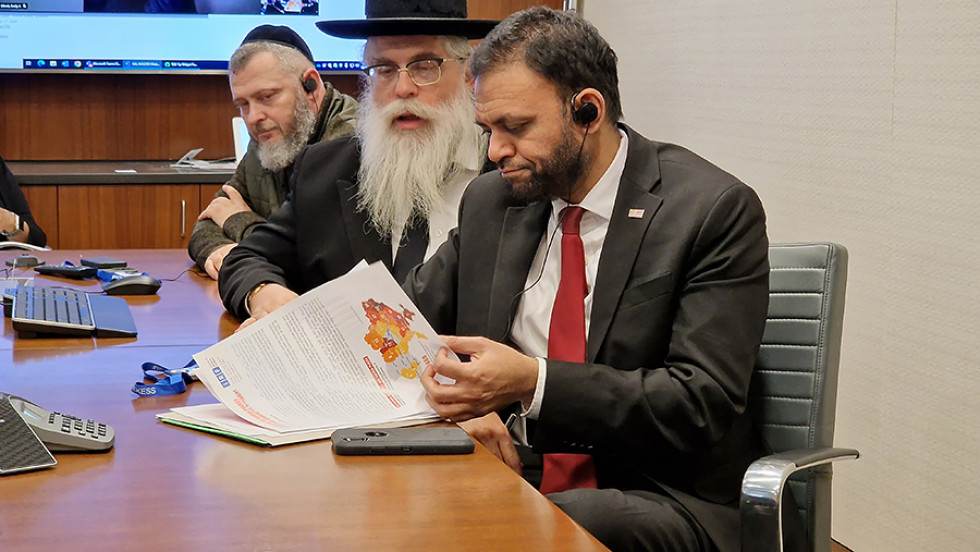
"The situation in Russia is even worse than during the Soviet Union. If the communist government was separated from the church because of its atheistic ideology, now the Kremlin totally controls all churches and religious organizations in Russia and uses them to promote the war against Ukraine. Therefore, Russian religious figures who are accomplices to the crimes of the Kremlin should not be perceived only as clergy, but it is appropriate to impose sanctions on them as propagandists carrying out orders from the Kremlin," said Metropolitan Yevstratiy (Zorya), a representative of the Orthodox Church of Ukraine.
On the same day, Ukrainian religious figures met with experts from the Heritage Foundation, a strategic research institute in the United States. They discussed the role of the Ukrainian religious community in protecting the values of democracy, the rule of law, freedom of religion, family principles, and other conservative values.
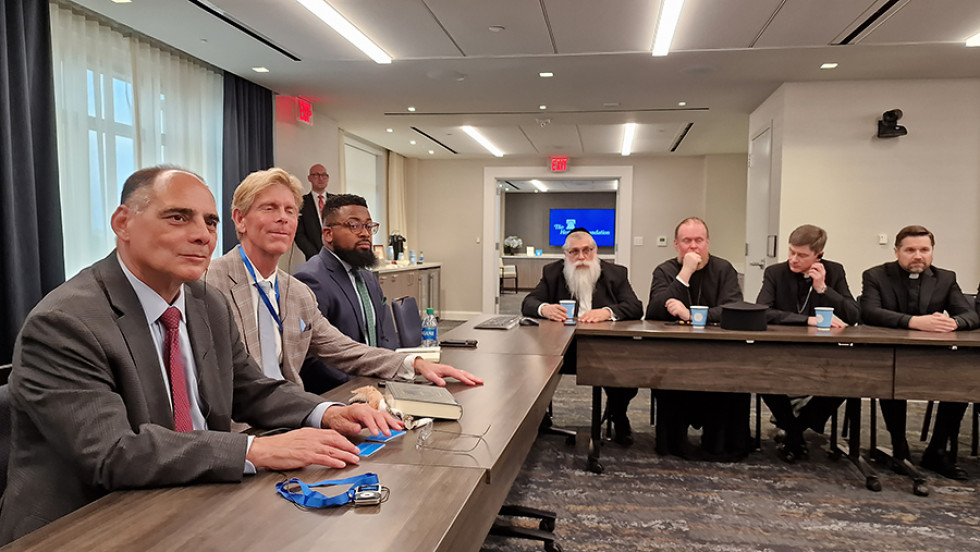
A separate meeting was also held with the leadership of the United States Agency for International Development (USAID). As a result, an agreement was reached to expand the partnership with the religious communities of Ukraine for the provision of humanitarian assistance and the implementation of educational projects in support of the people of Ukraine suffering from Russian aggression.
The delegation of the Ukrainian Council of Churches and Religious Organizations arrived in the United States consisting of representatives of the Orthodox Church of Ukraine, the Ukrainian Pentecostal Church, the Ukrainian Greek Catholic Church, the Roman Catholic Church in Ukraine, the Seventh-day Adventist Church in Ukraine, the Ukrainian Evangelical Church, the Union of Jewish Religious Organizations of Ukraine, the Religious Administration of Muslims of Ukraine, and the Ukrainian Bible Society, as well as the leadership of the Institute for Religious Freedom.
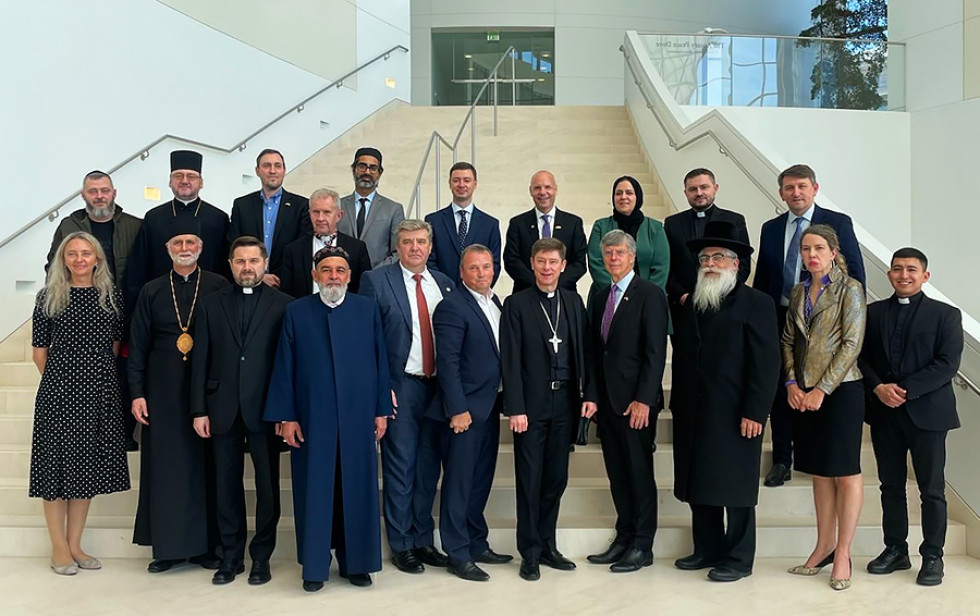
After the events in Washington, Ukrainian religious leaders will visit Houston, Texas, to hold a series of meetings with local religious figures, politicians, and opinion leaders. The visit of the UCCRO delegation to the United States is supported by RAZOM, a U.S. non-profit.